Protein in 1/2 Cup Ground Beef
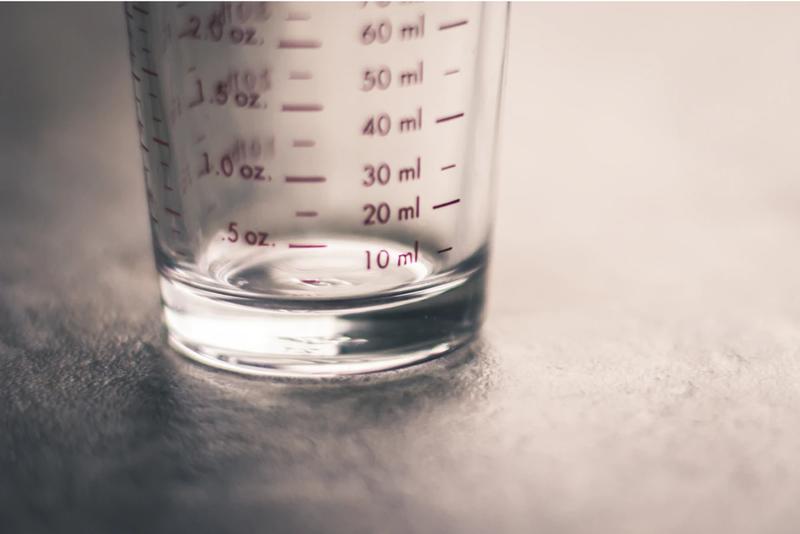
The cup, in United states customary units of measurement, holds 8 U.S. fluid ounces. If the U.S. fluid cup is equivalent to 8 fluid ounces, 2/3 of 8 fluid ounces is five.28 U.S. fluid ounces. A cup in the British majestic system, on the other paw, holds 10 imperial fluid ounces. 2-thirds of 10 imperial fluid ounces is equivalent to six.6 imperial fluid ounces. Most of the measurements in the U.S. customary and royal systems are identical. Nonetheless, there is a divergence in the measurements of fluid book between the two systems, even though both use the same names for the measurement units.
Fractions in Recipes
Visualizing fractions in recipe portions is piece of cake for some only can pose a challenge for others. Fractions are equal to a office of a whole. Two-thirds or two/3, for example, ways that a whole is divided every bit into three or "thirds" and the part of a whole measures 2 of the 3 equal portions.
Fractions are written with a top number referred to equally the numerator and a bottom number called the denominator. Between these top and lesser numbers is a partition line called a "vinculum."
Converting Fractions into Decimals
For some who are having trouble getting a mental movie of fractions in recipes, using a digital kitchen scale is one simple way of dealing with the outcome. Since kitchen scales do not display fractions, y'all'll offset take to convert the fractions into decimals. And then how do yous practise it?
The "vinculum" or the division line sits between the numerator and denominator because fractions represent partition. To get the decimal equivalent of a fraction, separate the numerator by the denominator, and the upshot will be the fraction in decimals. For case, 2/3 or 2 ÷ 3 gives yous .66.
This makes it easier to calculate for the 2/3 or .66 portion of a cup in ounces. Since U.S. cups hold eight ounces, multiply 8 past .66 to go the 2/3 portion of the cup in ounces. The same formula applies to the imperial system, where the regal cup holds ten ounces instead of 8.
U.s. Customary vs. British Royal Volume Measurements
Although the U.Due south. customary and imperial organisation units were derived from the English system, there is a slight difference in the fluid volume unit measurements between the two systems. Using the metric system for comparison, the following shows the differences:
- i U.S. customary fluid ounce = 29.573 milliliters
- 1 majestic fluid ounces = 28.413 mL
- i U.S. customary cup = 236.584 mL
- one imperial cup = 295.57 mL
- ane U.Southward. pint = 473.176 mL
- 1 majestic pint = 568.261 mL
- 1 U.S. quart = 940 mL
- 1 royal quart = 1,130 mL or 1.13 liters
- i U.Southward. gallon = three,780 mL or three.78 liters
- one imperial gallon = iv,540 mL or 4.54 liters
The U.S. customary pint holds xvi fluid ounces, while the imperial system pint holds 20 fluid ounces. Both these systems have quart measurements that hold ii pints and gallon units that are equivalent to four quarts.
Is it Usa or Purple?
One of the mutual bug encountered past those who are following recipes that they find online is figuring out whether the units that the recipe calls for are in U.S. customary or in the imperial system. One simple way to tell whether the measurements are in U.Southward. customary or imperial is to await for cup and gill measurements.
The British seldom utilize "cups" in recipe measurements, while Americans are largely unfamiliar with the "gill." It is also useful to note that recipes from the United kingdom of great britain and northern ireland are commonly weighed rather than measured with scoops.
Metric System Cup
Occasionally, some recipes may indicate a metric system loving cup. The metric system cup is exactly 250 mL, which is close to the U.South. customary loving cup. Two-thirds or .66 of the metric system cup is 164 mL, which is approximately 5.59 fluid ounces.
Source: https://www.reference.com/world-view/2-3-cup-ounces-10642f83d7c42d3e?utm_content=params%3Ao%3D740005%26ad%3DdirN%26qo%3DserpIndex
0 Response to "Protein in 1/2 Cup Ground Beef"
Post a Comment